
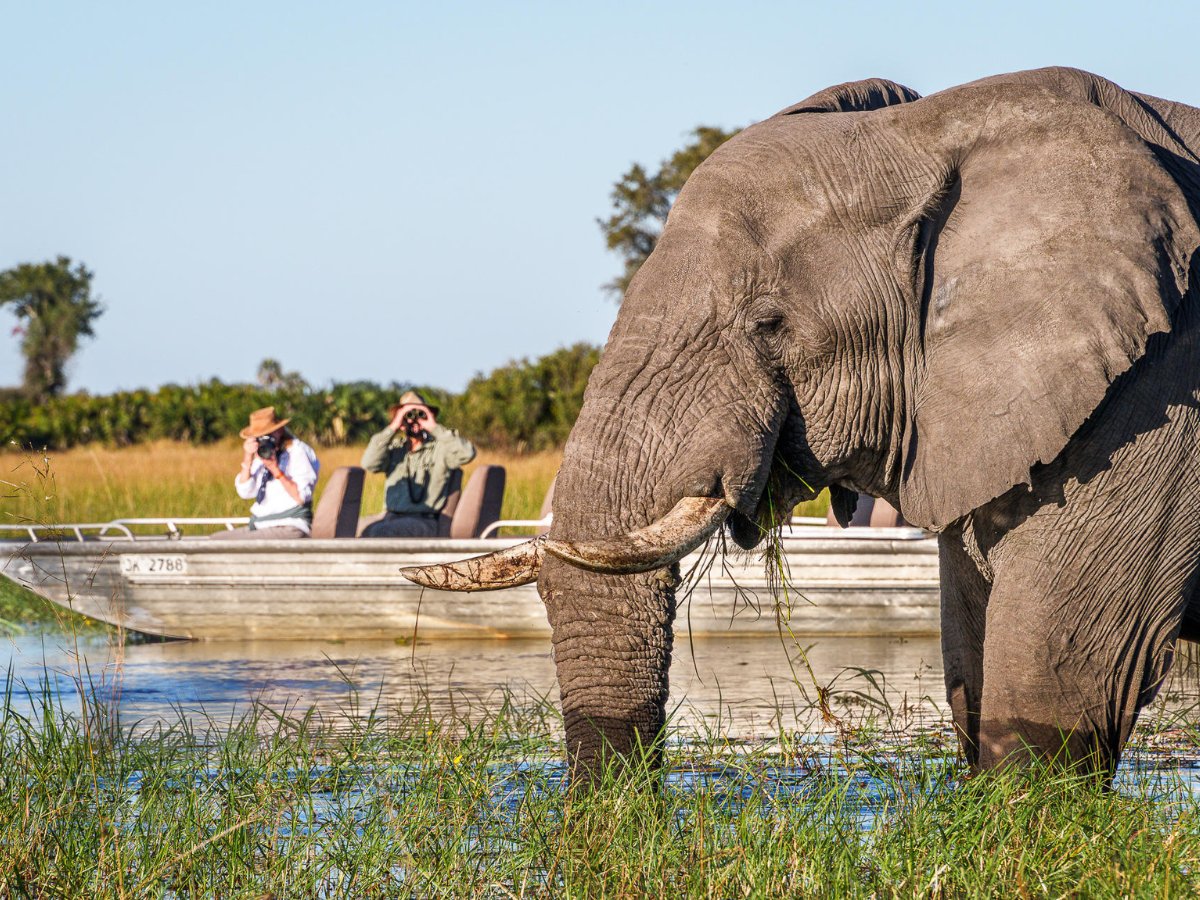

The Safari Feeling: Why Africa Stays With You Long After You Leave
Some trips are remembered in photographs. A safari is remembered in feelings.
The stillness before sunrise. The first lion call in the dark. The way everyone falls silent when elephants cross the road. The warmth of a campfire after a day in the bush. The strange, beautiful feeling of being far from everything — and somehow more yourself than you have felt in years.
This is what people mean when they say safari is life-changing.
It is not only the animals, although they are unforgettable. It is the perspective. The silence. The patience. The sense that the world is much bigger, older and wilder than the life we usually rush through.

Quick Answer: Why Does an African Safari Feel Life-Changing?
An African safari can feel life-changing because it removes you from everyday noise and places you close to wild animals in their natural habitat. It slows your sense of time, reconnects you with nature, makes conservation feel personal, and gives you rare moments of perspective. The experience is not only visual. It is emotional, sensory, humbling and often deeply personal.
For some people, safari is a lifelong dream. For others, it begins as curiosity: a special birthday, honeymoon, family trip, retirement celebration, or simply the feeling that they need to step away from routine and see something real.
Either way, safari has a way of getting under your skin.
You may arrive hoping to see lions, elephants or leopards. You may leave remembering something quieter: the sound of doves at dawn, the smell of dust after the first drive, the patience of your guide, the way your family stopped talking and simply watched an elephant herd pass in silence.
That is the safari feeling.
The Moment It Happens
For most travellers, there is a moment on safari when something shifts.
It may not be the biggest sighting of the trip. It may not be the lion, the leopard or the perfect photograph.
It might be sitting quietly while elephants feed around the vehicle. It might be hearing hyenas call after dinner. It might be watching your child stare at giraffes without saying a word. It might be standing under stars so bright they make the sky feel endless.
And suddenly, you realise you are not thinking about emails, deadlines, traffic, noise or all the small things that usually fill your mind.
You are just there.
Present. Quiet. Awake.
That is the moment safari becomes more than a holiday.
You Are a Guest in Their World
One of the most powerful things about safari is that the animals are not performing for you.
You are entering their world.
A lion does not care that you have travelled across the world. An elephant does not pause because you want the perfect photograph. A leopard may appear for five minutes, or vanish before you even lift your camera. Wild dogs may sleep all afternoon and then suddenly explode into movement at dusk.
That unpredictability is part of what makes safari so moving.
In ordinary life, so much is scheduled, controlled and designed around convenience. Safari is different. The wilderness does not bend itself around your expectations. You learn to wait. You learn to observe. You learn that the best moments often arrive when you stop trying to force them.
Seeing animals in their natural habitat is not the same as seeing animals anywhere else. It is humbling because you understand, perhaps for the first time, that you are a guest.
The Bush Teaches You to Slow Down
Modern life rarely rewards stillness.
Safari does.
Some of the most unforgettable safari moments happen because nothing is rushed. A guide switches off the engine. Everyone sits quietly. The wind moves through dry grass. A bird calls. A herd of impala lifts its head. Somewhere beyond the trees, something is moving.
At first, the silence may feel unfamiliar. Then it begins to feel necessary.
Safari teaches you to watch properly. To listen. To wait. To notice small changes: fresh tracks in sand, a warning call, vultures circling, elephants becoming still, the sudden tension in a herd.
This slower rhythm is one of the reasons safari can feel so restorative. You are not rushing between attractions. You are not ticking off a city map. You are allowing the day to unfold with the bush.
For many travellers, that change of pace is as powerful as the wildlife itself.

You Feel Small, Humbled and Fully Alive
There are moments on safari when the world feels much bigger than your worries.
Standing under a night sky with no city lights. Watching elephants move through camp as if the paths were always theirs. Hearing lions call in the dark. Seeing a landscape stretch so far that your daily concerns suddenly feel smaller.
This is not about feeling insignificant in a negative way. It is about perspective.
Safari reminds you that the world is older, wilder and more layered than the life most of us move through every day. It reminds you that nature is not background scenery. It is alive, complex and deeply connected.
That feeling can be emotional.
It can arrive unexpectedly: during a quiet sundowner, in the middle of a walking safari, beside a campfire, or while watching a mother elephant guide her calf across a riverbed.
Many travellers return home with the same thought:
I needed that more than I realised.
The Sounds Stay With You
People often imagine safari as a visual experience. And of course, it is.
The sight of a leopard in a tree, elephants crossing water, giraffes moving through golden light, or a lion standing in the road at dawn can stay with you forever.
But safari is also sound.
The crunch of tyres on sand. The call of a fish eagle. Hippos laughing from the river. Doves repeating through the morning. The low rumble of elephants. Cicadas in the heat. A campfire cracking at night. The sudden alarm bark of a baboon. The deep, distant sound of lions before sunrise.
Those sounds create memory in a different way.
They make the experience physical. You do not just look at the wilderness. You feel surrounded by it.
This is why the right camp matters. A lodge that allows the sounds of the bush in can feel far more memorable than one that tries to seal them out. True safari luxury is not always silence from nature. Sometimes it is silence from everything else.
A Great Guide Opens Your Eyes
A good safari guide does not simply find animals.
A great guide changes the way you see.
They read tracks in the sand. They understand behaviour. They know when to move and when to wait. They can explain why elephants are restless, why impala are staring in one direction, why birds are alarm-calling, or why a leopard may be nearby even when you cannot see it.
They turn the bush from scenery into story.
Without a guide, you may see a beautiful landscape. With the right guide, you begin to understand it.
This is one of the reasons travellers often remember their guides as much as the wildlife. A great guide can make a quiet morning fascinating. They can turn a footprint into anticipation, a broken branch into a clue, and a distant call into a moment of possibility.
At Dusty Boots Travel, we believe guiding is one of the most important parts of safari planning. The most beautiful lodge in the wrong place, with average guiding, will rarely create the same emotional impact as the right camp, in the right area, with a guide who brings the wilderness alive.
The Best Moments Cannot Be Planned
Safari is not a theme park.
That is exactly why it can be unforgettable.
You cannot order a leopard at 4pm. You cannot guarantee wild dogs on your first morning. You cannot ask elephants to cross the river just because the light is perfect.
Safari asks you to accept uncertainty.
And in a world where so much travel is planned, photographed, reviewed and expected, that uncertainty can feel refreshing.
Some days are dramatic. Others are subtle. You may follow lion tracks for an hour and never find them. You may stop for coffee and suddenly realise a cheetah is watching from a termite mound. You may think the drive is almost over, only for the best sighting of the day to happen five minutes from camp.
The bush does not follow your schedule.
That is part of the magic.


You Share Moments That Need No Words
A safari can be deeply personal, but it is also a powerful shared experience.
Couples remember quiet mornings together before the rest of the world feels awake. Families remember the moment the children saw their first elephant. Friends remember laughing around the fire after a day that none of them could have predicted.
Safari gives people something rare: shared attention.
Everyone is looking in the same direction. Everyone is listening to the same sound. Everyone is waiting for the same animal to step out from behind the trees.
In normal life, people are often together but distracted. On safari, that changes.
The best sightings are not only memorable because of the animal. They are memorable because of who you were with when you saw it.
This is why safari works so well for honeymoons, milestone birthdays, family celebrations and once-in-a-lifetime trips. It creates memories that feel shared, not manufactured.
If you are planning a romantic safari, you may also like our guide to the best African safari for honeymooners.
You Redefine What Luxury Means
Luxury on safari can absolutely mean a beautiful suite, a private plunge pool, excellent food, fine wine and thoughtful service.
But the deeper luxury is often something else.
Space. Silence. Time. A guide who knows when not to speak. A camp that lets the wilderness in. A sky full of stars. The ability to sit with a sighting without another vehicle crowding the moment. A slow breakfast after a morning walk. A fire at night. A view with no buildings, roads or noise beyond the bush.
This is why the most expensive safari is not automatically the most meaningful safari.
A trip becomes special when the place, guide, camp, season and rhythm all fit the traveller.
Some people want polished luxury and Big Five game viewing. Others want remote bush camps, walking, river safaris or private concessions. Some want romance. Some want adventure. Some want family connection. Some want solitude.
The right safari is not the one that looks best in a brochure.
It is the one that gives you the feeling you came for.
Wildlife Stops Being an Idea
Conservation can feel abstract until you are face to face with what is at stake.
Seeing a rhino in the wild is different from reading about rhino conservation. Watching wild dogs hunt is different from knowing they are one of Africa’s most vulnerable predators. Sitting quietly with elephants is different from hearing statistics about habitat loss.
Safari makes these things personal.
You begin to understand that protected areas are not just empty wilderness. They are living systems. They need space, responsible tourism, local employment, conservation funding, anti-poaching work, skilled guides, community involvement and thoughtful planning.
A well-designed safari can support the people and places that make these experiences possible.
That does not mean every safari is automatically responsible. It matters where you stay, how camps operate, how guides behave, how wildlife is approached, and whether tourism benefits conservation and local communities in meaningful ways.
For many travellers, this is one of the most lasting effects of safari: wildlife stops being an idea and becomes something they care about personally.
Different Safari Destinations Create Different Feelings
Not every African safari feels the same.
This is one of the most important things to understand when planning. The destination you choose will shape the emotional tone of your safari as much as the animals you see.
| Destination | The feeling it gives | Best for |
|---|---|---|
| Botswana | Space, silence, exclusivity, water and wilderness | Luxury travellers, honeymooners, privacy seekers and Okavango Delta experiences |
| Zambia | Walking, guiding, immersion and a deeper bush connection | Serious safari travellers, photographers and guests who want fewer crowds |
| Zimbabwe | Old-school safari, exceptional guiding, Mana Pools, Hwange and Victoria Falls | Travellers who want authenticity, guiding and strong safari heritage |
| South Africa | First-safari comfort, luxury lodges, Big Five reserves and Cape Town combinations | First-time safari travellers, families, honeymooners and luxury lodge seekers |
| Kenya | Classic savannah, Maasai Mara, culture and migration drama | First safaris, migration seekers, big cat lovers and iconic East Africa landscapes |
| Tanzania | Serengeti scale, Ngorongoro, migration and cinematic landscapes | Travellers wanting vast plains, iconic scenery and epic wildlife movement |
| Namibia | Desert silence, vastness, self-drive adventure and otherworldly landscapes | Photographers, road-trip travellers and people drawn to space and solitude |
Choosing the right destination is not only about where the animals are. It is about what kind of safari you want to feel.
For example, Botswana may suit you if you want privacy, private concessions and the Okavango Delta. Zambia may suit you if you want walking safaris, expert guiding and an immersive bush experience. South Africa may be ideal for a first safari with luxury lodges and easier logistics.
How to Choose a Safari That Actually Feels Life-Changing
Not every safari will feel life-changing.
A rushed itinerary, the wrong destination, poor guiding, overcrowded sightings, too many transfers, or a lodge chosen only because it looked impressive online can dilute the experience.
If you want a safari that feels meaningful, think beyond the checklist.
Ask yourself:
- Do I want privacy or a more social camp atmosphere?
- Do I want classic Big Five game drives or something more immersive?
- Do I want walking safaris, river safaris, private concessions or luxury lodges?
- Am I travelling for romance, family connection, photography, adventure or personal reflection?
- How important is comfort?
- How much remoteness do I actually want?
- Would I prefer fewer camps and a slower pace?
- Am I choosing the destination for the right season?
The best safaris are not built around doing the most. They are built around doing the right things, in the right places, at the right pace.
For first-time travellers, our guide to the best African safari for first-time travellers can help narrow the options.
The Safari Moments Travellers Never Forget
Ask people what they remember most from safari, and the answers are often surprisingly emotional.
Not always the rarest sighting. Not always the most expensive camp. Not always the perfect photograph.
They remember moments like these:
- The first time they heard lions calling in the dark
- An elephant herd passing so close that everyone stopped speaking
- A guide kneeling to explain tracks in the sand
- A leopard appearing silently from nowhere
- A child seeing giraffes for the first time
- A quiet coffee stop while the sun came up over the bush
- A campfire conversation under stars they had never seen before
- The feeling of being completely present
- The moment they realised they had not checked their phone for hours
- The drive back to camp when nobody wanted to speak because the day had been too beautiful to interrupt
These are the moments that make safari different from an ordinary holiday.
They do not just entertain you. They stay with you.


Is an African Safari Worth the Money?
A good safari is rarely cheap.
But value on safari is not only measured by thread count, room size or how many animals you see in one day.
It is measured by the quality of the wilderness, the skill of the guiding, the privacy of the experience, the integrity of the camp, the rhythm of the itinerary and the memories you bring home.
An African safari is worth the money if you value:
- Wildlife in its natural habitat
- Time in remote places
- Expert guiding
- Nature, silence and perspective
- Meaningful travel experiences
- Connection with a partner, family or friends
- Conservation-minded travel
- Once-in-a-lifetime moments
A safari may not feel worth it if you only want the lowest-cost holiday, predictable entertainment, city nightlife or resort-style relaxation.
That honesty matters.
Safari is not for everyone. But for the people it is right for, it can be one of the most powerful travel experiences of their lives.
The Dusty Boots Travel View
We do not believe a safari becomes life-changing simply because it is expensive.
It becomes life-changing when the right place, guide, rhythm, wildlife, silence and timing come together.
That might mean a private concession in Botswana, a walking safari in Zambia, a first Big Five safari in South Africa, a river journey in Zimbabwe, a migration safari in East Africa, or a desert journey through Namibia.
The point is not to book the most impressive-looking safari. The point is to build the safari that matches what you want to feel.
That is where thoughtful planning changes everything.
Final Answer: Why Does Africa Stay With You?
An African safari stays with you because it gives you something most modern travel does not: perspective.
It slows you down. It removes you from noise. It brings you close to wild animals without controlling the outcome. It teaches patience, attention and humility. It makes conservation personal. It reconnects you with nature, with the people you travel with, and sometimes with a quieter part of yourself.
The best safari moments are not always dramatic.
Sometimes they are simple: sunrise over the bush, a guide reading tracks, elephants moving through golden light, the sound of lions in the dark, or the feeling that for once, you are exactly where you are supposed to be.
That is why safari stays with people.
Not because it is just another holiday.
Because it is a reminder of how much bigger, wilder and more beautiful the world still is.
Planning a Safari That Truly Stays With You?
The right safari is not only about where you go. It is about how the journey feels.
At Dusty Boots Travel, we help you choose the destination, camps, season and pace that match the memories you want to bring home — whether that means Botswana’s quiet exclusivity, Zambia’s walking safaris, South Africa’s first-safari comfort, Zimbabwe’s old-school guiding or East Africa’s big-sky drama.
A safari should not just look impressive. It should feel unforgettable.
FAQ: Why an African Safari Can Be Life-Changing
Why is an African safari life-changing?
An African safari can feel life-changing because it brings you close to wild animals in their natural habitat, slows your pace, removes everyday distractions and gives you a powerful sense of perspective. It is not only about wildlife sightings. It is about nature, silence, guiding, connection and the feeling of being fully present.
Is an African safari worth the money?
Yes, an African safari can be worth the money if you value wildlife, wilderness, expert guiding, privacy, conservation and meaningful travel experiences. It may not be the right choice if your main priority is the cheapest possible holiday or a predictable resort-style trip.
What makes safari different from a normal holiday?
A safari is different because the experience is unscripted. Wildlife moves naturally, every day is different, and the best moments often happen when you slow down and wait. Safari is less about rushing between attractions and more about entering the rhythm of the wilderness.
What is the most emotional part of safari?
The most emotional part of safari is often not one single sighting. It may be hearing lions at night, watching elephants pass in silence, seeing a child’s first wildlife encounter, standing under an enormous sky, or realising how quiet and present you feel in the bush.
Which African safari is best for first-time travellers?
South Africa is often one of the easiest first safari destinations because of its luxury lodges, Big Five reserves, strong infrastructure and Cape Town combinations. Botswana, Kenya, Tanzania, Zambia and Zimbabwe can also be excellent first safaris depending on your budget, season and travel style.
Which safari destination feels the most remote?
Botswana, Zambia, Zimbabwe and parts of Namibia can all feel very remote, depending on the itinerary. Botswana is known for private concessions and the Okavango Delta, while Zambia is excellent for walking safaris and immersive bush camps. Namibia offers desert vastness and dramatic solitude.
Is safari good for couples or honeymooners?
Yes, safari can be exceptional for couples and honeymooners because it combines privacy, romance, nature, adventure and shared once-in-a-lifetime moments. Botswana, South Africa, Zambia, Tanzania and Kenya can all work beautifully depending on the style of honeymoon you want.
Is safari good for families?
Yes, safari can be wonderful for families, especially with older children who can enjoy wildlife, guiding and time outdoors. The right destination, lodge and pace are important. South Africa is often a strong family safari choice because of its accessibility and range of family-friendly lodges.
How do I choose the right African safari destination?
Choose your safari destination based on the experience you want, not only the animals you hope to see. Botswana is excellent for privacy and wilderness, Zambia for walking and guiding, South Africa for first-time comfort, Kenya and Tanzania for classic savannah and migration, Zimbabwe for guiding and Victoria Falls, and Namibia for desert landscapes.
How many days do you need for a meaningful safari?
For a meaningful safari, 6 to 8 nights is often a good starting point. A shorter safari can still be powerful, but more time allows you to slow down, settle into the rhythm of the bush and experience different habitats or regions without rushing.
Is a luxury safari worth it?
A luxury safari can be worth it when the extra cost improves the quality of the wilderness experience, guiding, privacy, location and overall itinerary. Luxury should not only mean beautiful interiors. The most meaningful safari luxury is often space, silence, expert guiding and access to exceptional wildlife areas.
What should I expect on my first safari?
On your first safari, expect early mornings, game drives, quiet observation, expert guiding, changing weather, downtime in camp and wildlife that appears on its own schedule. The best approach is to arrive curious, patient and open to the unexpected.